
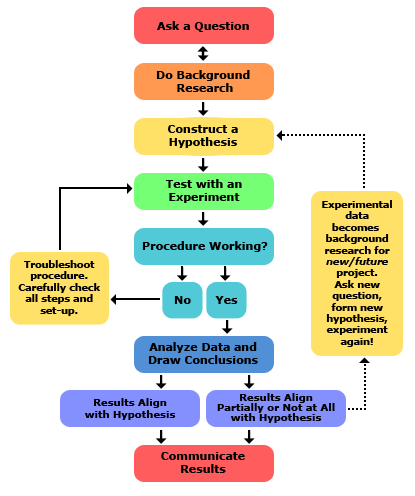
An organized pattern of investigation or standard sequence of steps normally followed by scientists or biologists all over the world in investigating particular event or problem
Steps include :
A cheque can be defined as a written order made by a current account holder (Drawer) to a bank. (Drawee)
The main features of a cheque
• Date
• Name of bank and branch
• The name of payee
• The term “Or bearer”
• The amount of money in words and figures.
• The term “Pay”
• Signature of account holder
• Magnetic recognition strip (Cheque no: Bank no, Branch no, and Account no.)
The different parties involved in a cheque
• Current account holder (drawer)
• Payee
• Drawee/ Bank
Cheques can be catergorized as follows
• Bearer cheque
• Order cheque
Factors taken into consideration when writing a cheque
• Use indelible ink when writing a cheque
• Note the relevant details on counter foil.
• Draw one line across any mistake you make and place full signature of the drawer
• Sign correctly according to the specimen signature
• Write the correct date and use safety method.
• No blank cheques should be signed.
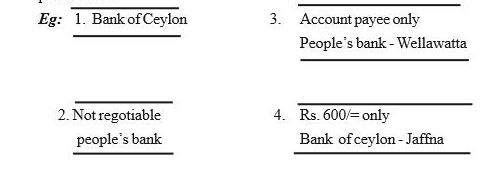
A Crossed cheque
It is a cheque where two parallel alines are drawn across its face or the name of a commercial bank is stated called a crossed cheque
• A cheque crossed for security
• There are 2 types of crossed cheques . They are general crossing and special crossing.
• A general crossed cheque is not negotiable or Two parallel lines drawn on the face of a cheque

A special crossed cheque refers to the name of a commercial bank with or without the parallel lines.
An endorsement is where you write your name on the back of the cheque as it appears on the face of the cheque. The endorsement will be made in the following instances
• When it is deposited in the bank
• When a cheque is transferred to another person
• Non – crossed cheques – encased over the counter
• When a bank refuses payment for a cheque it is called dishonoring
The reasons for dishonoring a cheque
• Stop payment
• The death of the account holder and the bank has been informed.
• Insolvency/ bankruptcy
• Court order
• Wrongly written
• Insufficient funds
Commercial banks maintain the following types of deposits
Current Account (Demand deposit)
A type of account where there is no interest on the balance and transactions are done by issuing cheques. Overdraft facilities and telermachine facilities are also available
Savings account
The purposes of introducing the type of account is to promote the saving habit among the people by providing on interest on the balance. Cash can be withdrawn and de posited at anytime. Transactions via Telermachine is also available.
Fixed Deposit
A deposit for a specific period of time and with a fixed interest rate. A High interest rate is paid on this deposit.
Facilities rendered to businessmen through the current account
• Payment can be made through cheques.
• Remittance facilities
• Overdraft facilities
• Statement of accounts
• Standing order facilities
The types of loan facilities in commercial banks.
• Over draft
• Loans
• An overdraft is a facility given by a bank to a customer issuing a cheque above the balance available in the current account.
• Overdraft can be categorized as temporary overdraft, permanent overdraft
• A bank loan is an amount of money given by the bank to be paid on a specific interest. It is given on certain conditions.
• Loans can be categorized as bank loans, business loans and consumer loans.
• A business loan is one which is given for commercial purposes on short , medium or long term and consumer loans are given for the purchase of long term fixed assets and sudden expenses.
There are many definitions of entrepreneurship
Examples :
An entrepreneur is someone who perceives an opportunity and creates an organization to pursue it. The entrepreneurial process includes all the functions and activities entrepreneurial and actions associated with perceiving opportunities and creating organizations to pursue them.
William D Bugrave.
Entrepreneurship is important for the following reasons
• There is a great demand for entrepreneurs who can find innovations to keep pace with the rapid changes in the world.
• Entrepreneurs are needed to identify the business opportunities in the competitive business world to convert them to the state of completion and generate expected benefits.
• Entrepreneurs are required in ventures such as farms, schools, universities, hospitals, government and social agencies since they can offer much – needed leadership in a fast – changing world.
Personal, social and economic benefits can be realized through entrepreneurship
Examples:
Personal benefits
• Opportunities for the use of personal skills
• Enhanced benefits through increased dedication.
• Social status and recognition
• Financial gain.
Social and economic benefits
• Job opportunities
• Opportunities for higher income.
• New products and services.
• High living standards • Higher rate of employment.
• Exploration of regional resources in production
• Development of new markets.
Some facts to explain the relationship between entrepreneurship and economic development are given below.
• The national product will increase because of the innovations of entrepreneurship.
• Contribution to economic development by generating new job opportunities
• Expansion of market activities and formation of new competitive markets are reasons for the economic development and formation of new competitive markets for economic development
• There will be a great demand for the regional resources since they are being used
• Starting new business is a reason for economic development
Several trends in entrepreneurship are given below
• Social entrepreneurship
• Woman entrepreneurship
• Intra entrepreneurship
01
02
03
04
05
06
07
08
09
10
11
12
13
14
15
16
17
18
19
20
21
22
23
24
25
26
27
28
29
30
31
32
33
34
35
36
37
38
39
40
41
42
43
44
45
46
47
48
49
50
51
52
53
54
55
56
57
58
59
60
Co-operatives are defined by the International Co-operative Association as follows. “An autonomous association of persons, united voluntary to meet their common economic, social and cultural needs and aspirations, through a jointly owned and democratically controlled enterprise.”
Several characteristics of co-operatives are given below
• An independent organization
• A group of voluntarily gathered individuals
• Collective ownership of members
• Having common needs and objectives
• A business with democratic control
Several advantages of co-operatives are given below
• Has democratic control
• Provides essential goods and services at fair prices
• Ability to do business in various fields.
• Mutual co-operation
Several disadvantages of co-operatives are given below
• Limited sources of funds
• Business activities have to be done according to co-operative policies
Co-operative societies are registered through the commissioner of Co-operative Development of the Co-operative Development Department under the co-operative development commissioner of the provincial council
The following documents should be submitted to the commissioner of co-operative development to register a co-operative society
• An application form
• Two copies of the interim constitution
• The feasibility report of proposed economic activities
. • The report of the annual general meeting at which the proposal to register the co-operative society was approved.
• A certificate from the working committee stating that the members who to signed the application had paid than membership fees and that the money is under the trust of the working committee.
• A map giving directions to the location of the society.
The following are the milestones of the evolution of the co-operative movement
1912 – Start of lending co-operatives
1942 – Extablisment of consumer co-operative societies.
1947 – Extablisment of the co-operative societies for agriculture production and distribution
1957 – Start of multi purpose co-operative societies
1971 – Restructuring of co-operatives
1992 – Amendment of co-operative societies
Policies of the co-operative movement
• Voluntary and open membership
• Democratic member control
• Social economic participation
• Autonomy and independence
• Co-operative education training and information
• Co-operation among local, national and international co-operatives
• Concern for society
Co-operative societies contribute to the economic development of the country in various ways.
Eg. Increasing the employment contributing to the national production through multi purpose co-operative socialities, manufacturing co-operative societies, Thrift credit co-operative societies and industrial co-operative societies
New trends can be seen in the co-operative movement within the current complex and competitive economy
Eg. Setting up of self service shops Stepping into new business fields
Franchising is a form of business which allows another business organization to supply their goods and services in a specific market place.
• There are two parties involve in franchise business
• The company which permits another to sell goods under the trade name of the franchise (Franchiser)
• The company which obtains permission from the franchiser (Franchisee)
The agreement between the franchiser and franchisee is known as the franchise agreement.
• The following are supplied by the franchiser to the franchisee
• Permit to use their trade name
• Management training
• Support for marketing
• Finance facilities
• Layout of the shop
• Goods and equipment
• Technology
The following should be done by the franchisee
• Agreement to act according to the terms and conditions of the franchiser
• Invest capital • Purchase of goods only from franchiser or the suppliers approved by the franchiser
• Payment of the royalty as agreed
Franchises can be classified as
• Product franchises
• Manufacturing franchises
• Business method franchises
Several advantages of franchise businesses are given below
• Franchiser can expand the business without his own investment
• Franchisee gets a large market due to the goodwill of the franchiser
• Franchisee gets a chance to receive a large profit
• Franchisee receives management training from the franchiser
Several disadvantages of franchise businesses are given below
• Franchisee does not enjoy complete independence since the franchiser’s control is there
• There is a risk with regard to the investment since it depends on the franchiser’s goodwill
• There is uncertainty of profits
• Purchase of franchise is costly.
A company is a group of individuals incorporated under the company act.
Several common characteristics of incoporated companies are given below.
• An institution incorporated under the company act.
• It is a legal entity separate from its membership.
• There is continuous existence.
• Owners have limited liability
• Management is done by the board of directors
Several advantages of companies are given below
• A large amount of capital can be collected
• Large scale businesses can be started
• Business activities can be carried by enrolling skilled managers
• Investors can be recruited because of limited liability.
• Death or resignation of a shareholder will not affect the existence of the business
• Shares are transferrable.
• Human resources at a high level can be recruited
Several disadvantages of companies are given below
• Numerous rules and regulations
• Have to follow a complex procedure to start the business and a cost is involved in it.
• Minor shareholders have little power since the voting power depends on the number of
shares.
• Taxes should be paid on the profits of the company and also on the dividends received by
the shareholders.
.
Companies should be registered under the company act of the relevant country.
Companies in Sri Lanka should be incorporated under the Company Act No. 7 of 2007
51
Documents to be forwarded to the registrar of companies for the incorporation of a
company
• Application for registration
• Articles of Association
• Declaration from each of the initial directors giving their consent to act as a director.
• Declaration from the initial secretary to act as the secretary, to the company.
The following companies can be incorporated according to the Company Act No.7 of 2007
• Limited companies
• Private limited companies
• Public limited companies
• Listed companies
• Non-listed companies
• Off shore companies
• Unlimited companies
• Companies limited by guarantee
• Foreign companies
The following criteria are used to compare the companies
• Number of members
• Liability
• Supplying of capital
• Shares
• Debentures
• Management
Limited companies are companies in which the liability of the shareholders are
limited to the amount of money they paid as agreed to pay, for their shares.` These are also known as the companies limited by shares.
Several characteristics of a private limited company are given below.
• Minimum number of members is one and the maximum is fifty. The shareholders
employed in the company are not included in the above maximum number.
• Minimum number of directors is 01 and the maximum is unlimited
• Issuing of shares to the public in not allowed.
• Dividends can be distributed with the consent of all the shareholders without a
solvency test.