• Avogadro constant (L) is given by the equation where N = number of particles n = amount of substance Avogadro constant (L) = 6.022 x 10²³ mol -1
• Faraday constant (F) Faraday constant is defined as the molar charge of the proton. F = e L L – Avogadro constant e – Charge of the electron Faraday constant (F) = 96500 C mol-1
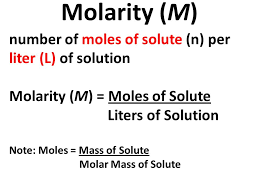
• There are various ways in which the composition can be expressed. They are; Mass fraction Volume fraction Mole fraction Mass/volume Moles /volume
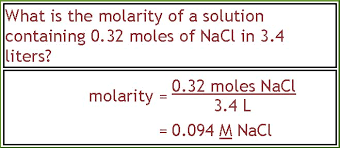
• When the composition is expressed in terms of moles / volume it is called as concentration.
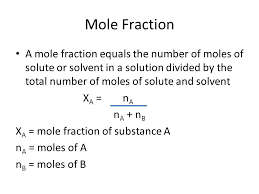
• Composition of a mixture can be expresed as a fraction
Mass fraction
Mass fraction, denoted by ‘w’ is defined as “the ratio of mass of the solute and the total mass of solute and solvent present.”
In a mixture of A and B,

Volume fraction

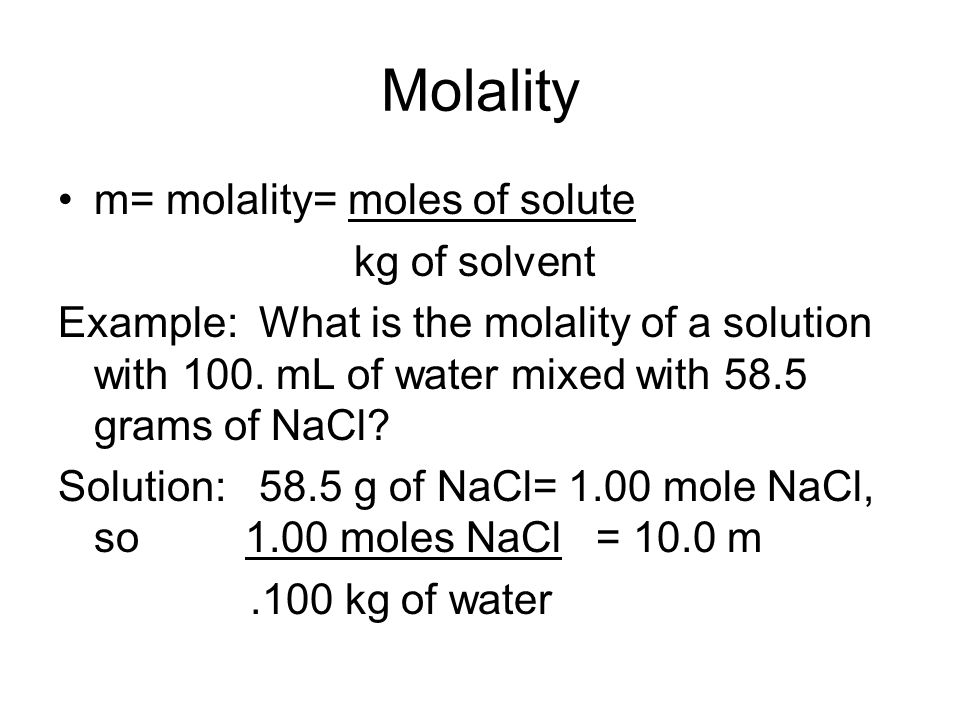
• Composition stated as the number of parts per million of parts (ppm) = fraction x 106
• Composition stated as the number of parts per billion of parts (ppb) = fraction x 10 9
Composition of substances present in very small amounts is commonly expressed in terms of parts per millions (ppm) and parts per billion (ppb).
• Density of water is 1000 g dm-3 . Density of a dilute aqueous solution can be considered as approximately equals to the density of water. Therefore, mass of 1 dm3 of a solution = 1 kg = 1000 g = 1000000 mg For such instances, mass/ volume ratio can also be expressed in ppm. As a mass fraction, 1 ppm means that 1 000 000 mg of the mixture contains 1 mg of the particular substance.
For dilute solutions, 1 ppm = 1 mg dm-3 = 1 g cm-3
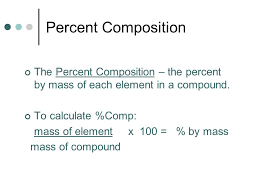
• Empirical formula : The formula that shows the simplest whole number ratio between the number of atoms in agreement with the composition of a compound is its empirical formula eg. : Empirical formula of benzene is CH
• Molecular formula : The formula that shows the exact number of atoms in a molecule of a compound is its molecular formula. eg : Molecular formula of benzene is C6H6
The ratio between the empirical formula mass and the molecular formula mass of a compound is a whole number
Molecular formula = (Empirical formula) n
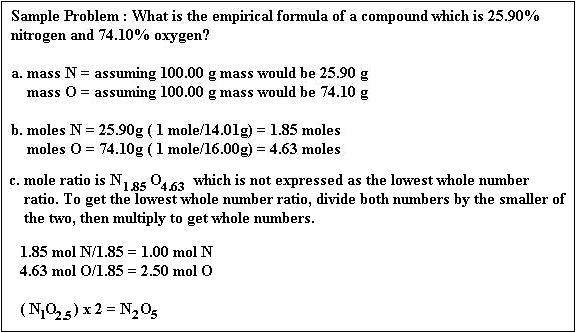
A chemical equation should be balanced with respect to mass and charges of ions in order to get quantitative information from it.
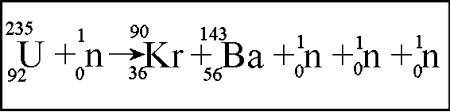
balancing simple nuclear equation
Inspection method
Balancing an equation by balancing the number of atoms of each kind in the reactants and products is called inspection balancing.
Balancing redox equations by checking the changes in oxidation number
One way to balance redox reactions is by keeping track of the electron transfer using the oxidation numbers of each of the atoms. For the oxidation-number-change method, start with the unbalanced skeleton equation. The example below is for the reaction of iron(III) oxide with carbon monoxide. This reaction is one that takes place in a blast furnace during the processing of iron ore into metallic iron
Fe2O3(s)+CO(g)→Fe(s)+CO2(g)
Step 1: Assign oxidation numbers to each of the atoms in the equation and write the numbers above the atom.
+3 -2 +2 -2 0 +4 -2 Fe2O3(s)+C O(g)→Fe(s)+CO2(g)
Step 2: Identify the atoms that are oxidized and those that are reduced. In the above equation, the carbon atom is being oxidized since its oxidation increases from +2 to +4. The iron atom is being reduced since its oxidation number decreases from +3 to 0.
Step 3: Use a line to connect the atoms that are undergoing a change in oxidation number. On the line, write the oxidation-number change.

The carbon atom’s oxidation number increases by 2, while the iron atom’s oxidation number decreases by 3. As written, the number of electrons lost does not equal the number of electrons gained. In a balanced redox equation, these must be equal. So, the increase in oxidation number of one atom must be made equal to the decrease in oxidation number of the other.
Step 4: Use coefficients to make the total increase in oxidation number equal to the total decrease in oxidation number. In this case, the least common multiple of 2 and 3 is 6. So the oxidation-number increase should be multiplied by 3, while the oxidation-number decrease should be multiplied by 2. The coefficient is also applied to the formulas in the equation. So a 3 is placed in front of the CO and in front of the CO2. A 2 is placed in front of the Fe on the right side of the equation. The Fe2O3 does not require a coefficient because the subscript of 2 after the Fe indicates that there are already two iron atoms.

Step 5: Check the balancing for both atoms and charge. Occasionally, a coefficient may need to be placed in front of a molecular formula that was not involved in the redox process. In the current example, the equation is now balanced.
Fe2O3(s)+3CO(g)→2Fe(s)+3CO2(g)
Balancing equations using oxidation / reduction half reactions
Balancing redox reactions is slightly more complex than balancing standard reactions, but still follows a relatively simple set of rules. One major difference is the necessity to know the half-reactions of the involved reactants; a half-reaction table is very useful for this. Half-reactions are often useful in that two half reactions can be added to get a total net equation. Although the half-reactions must be known to complete a redox reaction, it is often possible to figure them out without having to use a half-reaction table. This is demonstrated in the acidic and basic solution examples. Besides the general rules for neutral conditions, additional rules must be applied for aqueous reactions in acidic or basic conditions.
The method used to balance redox reactions is called the Half Equation Method. In this method, the equation is separated into two half-equations; one for oxidation and one for reduction.
Each equation is balanced by adjusting coefficients and adding H2O, H+, and e– in this order:
chemical bond – The electrons in the valence shell of the atom are involved in the formation of bonds. The attraction present between the atoms so as to minimize the energy in a polyatomic system is called a chemical bond.
Ionic bonds
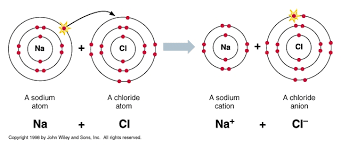
• The electrostatic attraction between positive and negative ions that are formed when the valence electrons of one atom are given to another atom during the formation of a bond between a pair of atoms with a high difference in electronegativity, is called the ionic bond.
• When sodium chloride in the solid state is considered, the ions are attracted electrostatically and packed in a definite pattern. Therefore, when an ionic compound exists in the solid state, ions do not have the ability for movement. Particles can only vibrate while being in the places where they are situated. Accordingly, an ionic crystal does not conduct electricity.
• When sodium chloride in the liquid state is considered, the ions exist separately. An ionic compound in the molten state conducts electricity because ions have the ability of movement.
Polarization-Polarizing power of a cation and polarizability of an anion
• When an ideal ionic compound is considered, the anion and cation which are its components are regarded as existing in the form of regular solid spheres. But depending on the nature of the cation and the anion which are the constituents of the ionic compound, the cation attracts the electron cloud (polarizing power of the cation) of the anion and at the same time repels the nucleus thus distorting or polarizing the anion and as a result distortion occurs in the electron cloud of the anion (polarizability and tendency to undergo polarization). If the degree of polarization is insignificant the bond remains ionic whereas if it significant electron cloud will be pulled towards the cation resulting in a considerable degree of covalent character.
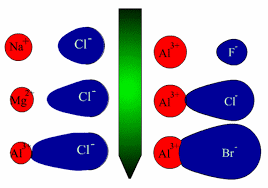 ⇓ Increase in polarization of the anion . Showing Covalent character to a considerable extent.
Cation : If cation is Smaller in size Highly charged or both, polarizing power is high.
Anion : If anion Larger in size Highly charged or both , polarizability is high (tends to distort or polarize).
Examples : In AgF, AgCl, AgBr and AgI the ionic properties vary as follows. AgF > AgCl > AgBr > AgI
When the anion becomes larger the polarizability increases with the resulting increase of covalent character. CsI > KI > NaI > LiI
When the cation becomes smaller the polarizing power increases with the resulting increase of covalent character. MCO3 → MO + CO2 Breaking up of the group into O2- and CO2 is influenced by the polarizing power of the M2+ ion.
The polarizing power of the cations in Group II varies in the order, Be>Mg>Ca. Therefore the thermal decomposition temperatures of group two carbonates vary in the order BeCO3 < MgCO3 < CaCO3 .
Covalent bonds
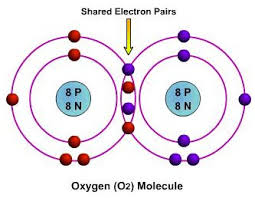
• Covalent bonds are formed by keeping the bond pair of electrons common to both the atoms. Covalent bonds are formed by the overlapping of atomic orbitals.
• If the electronegativity difference between two covalently bonded atoms is zero, the bond is referred as a non-polar covalent bond. Other covalent bonds are referred as polar covalent bonds.
• A bond can be formed by the overlapping of an orbital containing lone pair of electrons with the empty orbital of the valance shell of another atom. The bond formed in this way is called the dative bond. There, the species which give the lone pair of electrons is called the donor group (Lewis base) and the species that receives the electrons to form the bond is called the acceptor group (Lewis acid).
Metallic bonds
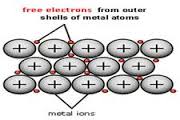
The electrons in the valence shell of metallic atoms are loosely bonded to the atom. Therefore, there is a tendency for the metallic atoms to release the electrons in valence shell and exist as positive ions. As a result a system is formed in which positive ions are immersed in a sea of electrons which were released from the metal atoms. The positive ions and the sea of electrons get attracted electrostatically to form metallic bonds.
Metals conduct electricity due to the presence of free electrons.
Strong metallic bonds are formed when the size of the metal ion decreases, when the charge of the metal ion increases and when the number of electrons contributing to the metallic bond increases.
When the strength of metallic bond increases melting point of the metal also increases.
Attractions that exist in covalently bonded molecules or in ionic compounds or in metalic latices are referred as primary interactions.
A structure where the covalent bonds in a covalent molecule or an ion group are represented by Lewis dot symbols, with shared pairs of electrons shown by a short line or a pair of dots (or a pair of dot – cross), and the lone pair of electrons on each atom by pairs of dots or pairs of crosses, is called a Lewis structure. In the Lewis structure only the valence electrons are shown.
Example – Consider H2O molecule.
Lewis dot – cross structure of the molecule of water
Lewis structure of the molecule of water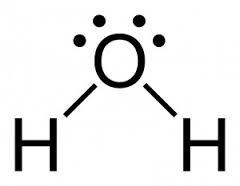
From a Lewis structure information can be obtained about the way that atoms are attached in a molecule, how the number of electrons in the valence shells are distributed and also about the type of the bonds formed. But the Lewis structure does not give information about the shape. By obtaining the number of bond electron pairs and the number of lone pairs situated around the central atom of a molecule from the Lewis structure, the shape of the molecule can be predicted by applying the valence shell electron pair repulsion(VSEPR) theory .
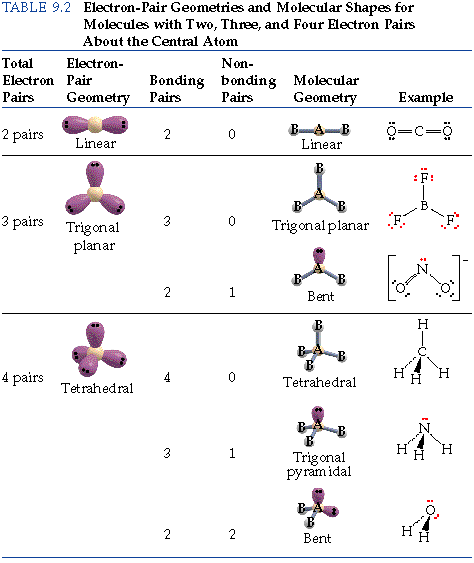
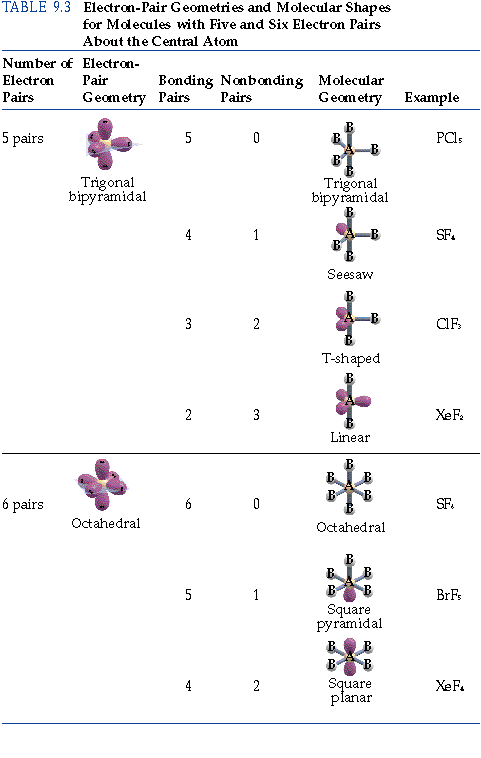
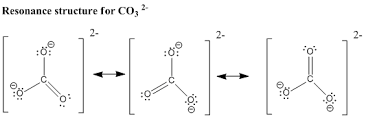
There are occasions where two or more Lewis structures exist for a given same molecule or the ion group which differ from one another only due to differences in the electron arrangement. Such structures that exist for a certain molecule are known as resonance structures. The actual structure of the molecule is not the same as any of these but is a more stable different structure formed by the hybridization of resonance structures. The resonance structures/resonance forms/canonical structures do not have independent existence, but merely drawn for convenience.
Resonance structures for O3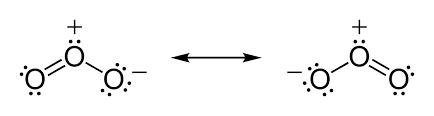
• A formation where the building units are attached to one another in an orderly pattern can be described as a lattice.
•Presence of a formal pattern and the formation from a repetitive basic unit is a common feature of the lattices.
• Various substances with lattice like structures exist in nature. Substances with atoms or molecules or ions arranged in orderly lattice patterns exist.
• Substances with lattice arrangements can be classified according to their building units as follows. • Homoatomic lattices • Polar molecular lattices • Heteroatomic lattices • Ionic lattices • Non – polar molecular lattices
• Bonding formed during the formation of the lattice are different, depending on the nature of the building unit of the lattice substance. The nature of the bonding formed during the formation of the lattice affects the physical properties of the lattice.
Homoatomic lattices
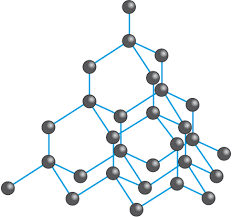
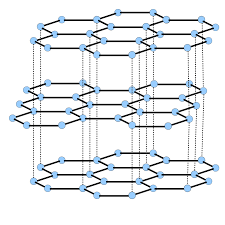
Diamond and graphite lattices which are formed from homogeneous atoms are examples for homoatomic lattices.
Lattice arrangement of diamond
Lattice arrangement of graphite
Heteroatomic lattices
• silicon dioxide which is formed from heterogeneous atoms is an example for heteroatomic lattices.
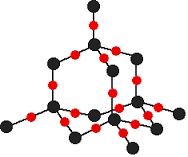
• Homogeneous and heterogeneous atomic lattices are formed by atoms covalently bonding with one another.
• Substances composed of homogeneous and heterogeneous atomic lattices have a high hardness and also higher melting points/ boiling points because such lattices are formed by strong covalent bonds. There is no tendency to go into solution because the covalent bonds present in atomic lattices are very strong.
• Electricity is not conducted through atomic lattices as they lack mobile electrons. (Graphite is an exception)
Non-polar molecular lattice
• Iodine crystals which are formed from non polar iodine molecules are examples for non-polarized molecular lattices.
Lattice arrangement of iodine
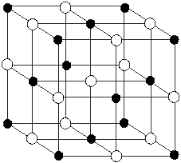
• Non polar molecular lattices are built by the bonding of non polar molecules to one another by attractive forces formed between induced dipoles.
• the substances with non polar molecular lattices consisting of molecules bonded to one another by weak Van der Waals forces have a low hardness and their melting points/ boiling points are also low relative to substances formed by other lattices.
• the substances formed by non polar molecular lattices dissolve in non polar solvents because they consist of non polar molecules and they do not conduct electricity as they do not possess mobile electrons.
Polar molecular lattice
• Ice which is formed from polar molecules is an example for polar molecular lattice.
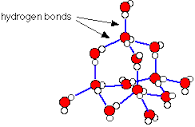
• polar molecular lattices are formed by the bonding together of polar molecules to one another by attractive forces developed between permanent dipoles.
• Substances formed by polar molecular lattices show a high tendency to dissolve in polar solvents but do not conduct electricity due to the lack of mobile electrons
• Substances formed by polar molecular lattices consisting of molecules bonded by permanent dipole – permanent dipole attractive forces (or hydrogen bonds) have a high hardness and also higher melting points / boiling points compared to substances formed by non polar molecular lattices.
Ionic lattice •
Sodium chloride which consists of sodium ions and chloride ions is an example for ionic lattice.
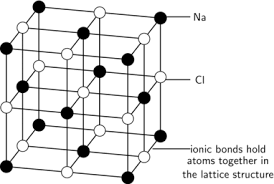
• Ionic lattices are formed by the bonding together of ions by strong electrostatic attractions developed between positively charged and negatively charged ions.
• Substances formed by ionic lattices bonded by strong electrostatic attractions show higher melting points/boiling points and also a high hardness.
• The substances with ionic lattices show a tendency to dissolve in polar solvents.
• The substances consisting of ionic lattices do not conduct electricity in the solid state due to the lack of mobile electrons or mobile ions. The substances with ionic lattices conduct electricity in the molten state or in solution because of the presence of mobile ions.
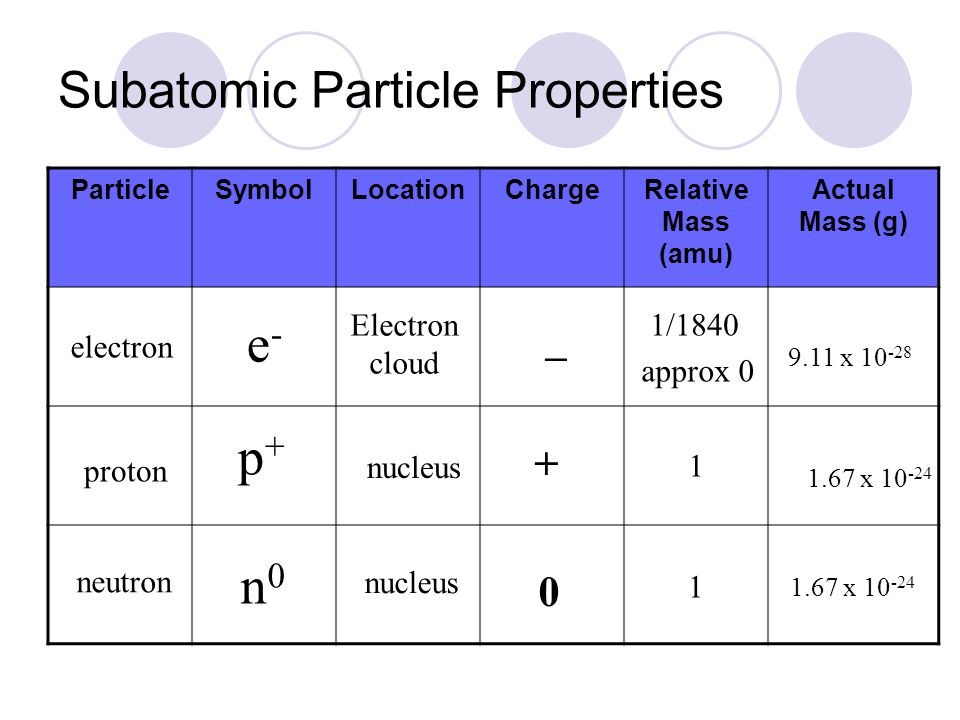
sub-atomic paticles
Cathode rays

Discharge tube
Discharge tube is also called “CROOK TUBE”. It is made of a glass tube which consists of two metallic plates. One plate is connected to positive terminal of high voltage power supply and the other to negative terminal. The plate connected to the positive terminal is called “ANODE” the other connected to negative terminal is called “CATHODE”. The tube is filled with any gas.
Experiment
In discharge tube experiment, at low pressure and at very high voltage, an electric current is passed. Due to passage of electric current, a stream of rays is passed in the tube originating from cathode. These rays are called “CATHODE RAYS”.
Properties of cathode rays
Isotopes
The atoms which have the same atomic number and different mass numbers are defined as isotopes of that element.
Nuclides
Atomic species of which the proton number and nucleon number is specified.
Type of nuclides 1. Stable nuclides existing in nature 2. Unstable nuclides existing in nature 3. Artificial radioactive nuclides
Radioactivity
Emission of radiation by unstable nuclei or particles spontaneously for the sake of stability of the nucleus is called radioactivity. These can penetrate and ionize gases.
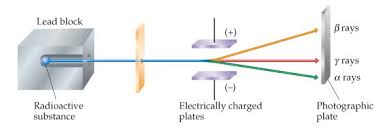
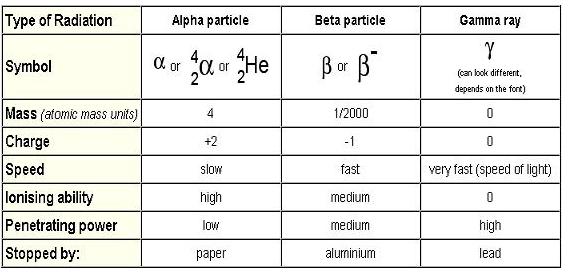
Properties of alpha, beta and gamma rays
Thomson’s atomic model
Earliest theoretical description of the inner structure of atoms, proposed about 1900 by Lord Kelvin and strongly supported by Sir Joseph John Thomson, who had discovered (1897) the electron, a negatively charged part of every atom. Though several alternative models were advanced in the 1900s by Lord Kelvin and others, Thomson held that atoms are uniform spheres of positively charged matter in which electrons are embedded. Popularly known as the plum-pudding model, it had to be abandoned (1911) on both theoretical and experimental grounds in favour of the Rutherford atomic model.
Rutherford’s model
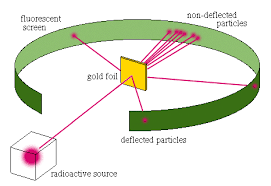
Rutherford overturned Thomson’s model in 1911 with his well-known gold foil experiment in which he demonstrated that the atom has a tiny, heavy nucleus. Rutherford designed an experiment to use the alpha particles emitted by a radioactive element as probes to the unseen world of atomic structure.
Gold foil experiment
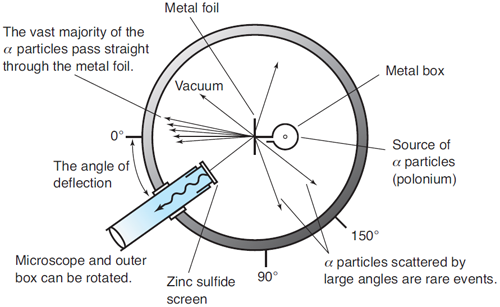
At Rutherford’s behest, Geiger and Marsden performed a series of experiments where they pointed a beam of alpha particles at a thin foil of metal and measured the scattering pattern by using a fluorescent screen. They spotted alpha particles bouncing off the metal foil in all directions, some right back at the source. This should have been impossible according to Thomson’s model; the alpha particles should have all gone straight through. Obviously, those particles had encountered an electrostatic force far greater than Thomson’s model suggested they would, which in turn implied that the atom’s positive charge was concentrated in a much tinier volume than Thomson imagined.
When Geiger and Marsden shot alpha particles at their metal foils, they noticed only a tiny fraction of the alpha particles were deflected by more than 90°. Most just flew straight through the foil. This suggested that those tiny spheres of intense positive charge were separated by vast gulfs of empty space.Most particles passed through the empty space and experienced negligible deviation, while a handful struck the nuclei of the atoms and bounced right back.
Rutherford thus rejected Thomson’s model of the atom, and instead proposed a model where the atom consisted of mostly empty space, with all its positive charge concentrated in its center in a very tiny volume, surrounded by a cloud of electrons.
Bohr model and postulates
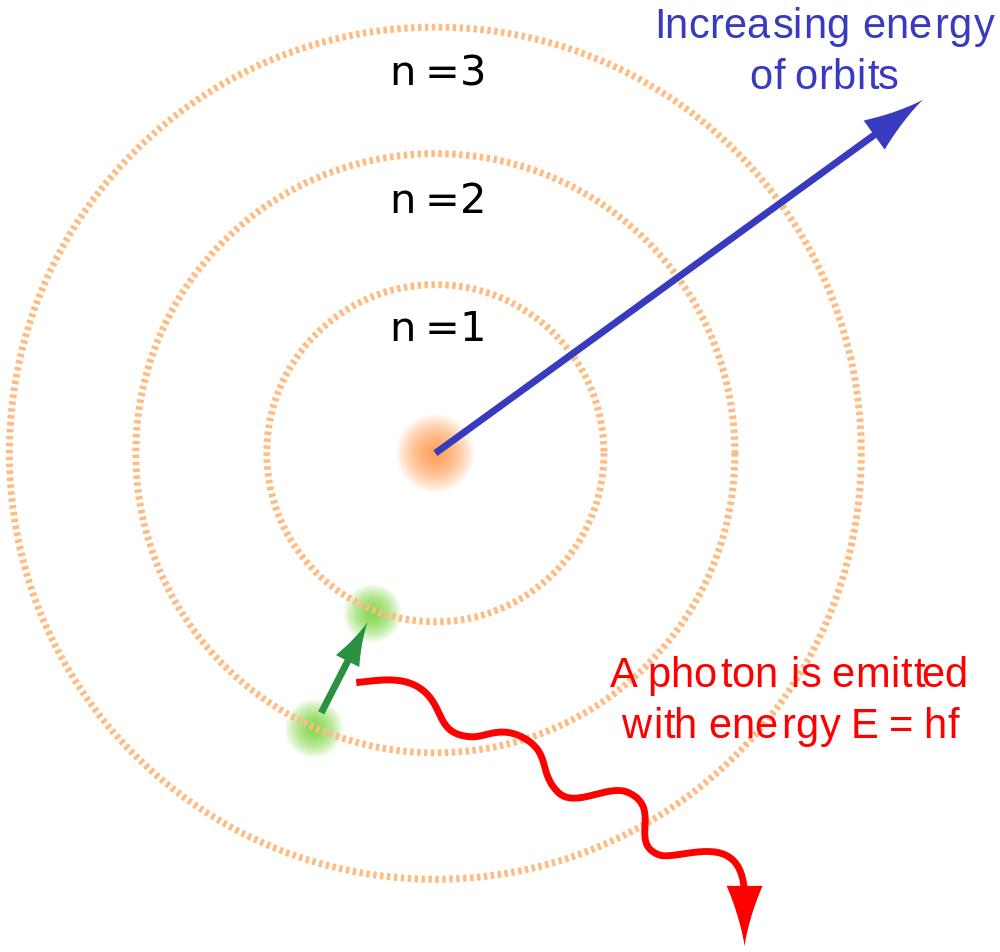
Bohr model is based on three postulates. 1. Only orbits of certain radii, corresponding to certain definite energies, are permitted for the electron in a hydrogen atom. 2. An electron in a permitted orbit has a specific energy and is in an “allowed” energy state. An electron in an allowed energy state will not radiate energy and therefore will not spiral into the nucleus. 3. Energy is emitted or absorbed by electron only as the electron transfers from one allowed energy state to another. This energy is emitted or absorbed as a photon, E = h υ .
Formation of cations and anions
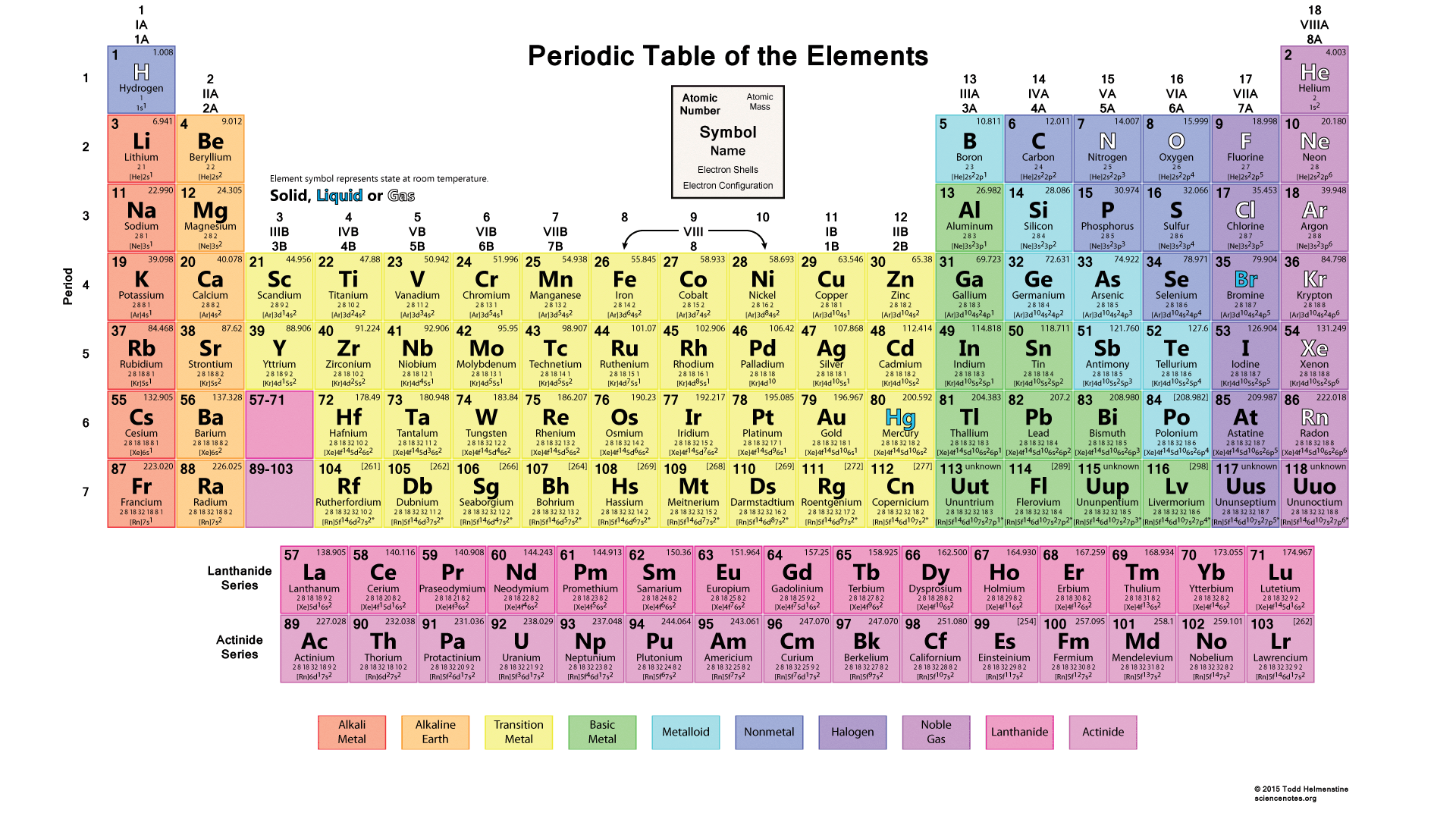
• Formation of anions and cations depends on the number of electrons in the valency shell and ionization energy. • The elements of the group I(1), II(2) and III(13), form cations while the elements of the groups V(15), VI(16) and VII(17) form anions. • The elements in the group IV(14) generally do not form free M4+ ions. The reason is the high aggregate of first, second, third and fourth ionization energies.
Oxidation states
• In the elemental state oxidation number of any element is considered as zero. • Oxidation state is a measure of the electron control that an atom has in a compound compared to its elemental state. • The highest oxidation number that an element can have in a compound is equal to its number of valency electrons. • In combined state certain elements have variable oxidation states.
Oxidizing ability
• In general oxidizing ability of elements decreases across the period up to group 17. • In general oxidizing ability of elements increases down the group.
Electronegativity
• The ability of an element to attract electrons in a bond of a molecule towards itself varies from one element to the other. When expressed quantitatively, this ability is known as the electronegativity of an element.
• Electronegativity is expressed according to various scales. The following table gives the electronegativity values for different elements according to the Pauling scale in their most common oxidation state.
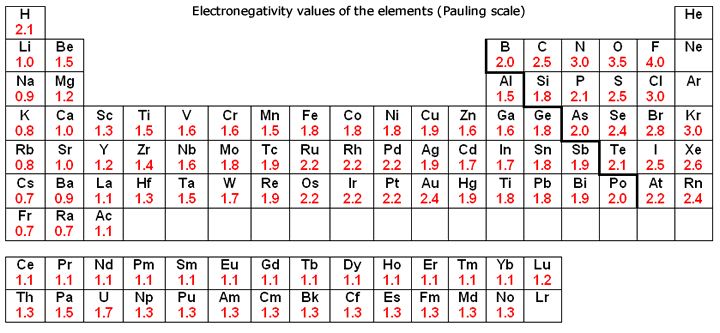
Although a different value for the electronegativity of each element is stated according to the Pauling scale, the electronegativity of an atom of an element changes according to its environment (Hybridization, Charge, Oxidation number). Example : In the species NH2– , NH3 , NH4+ and the electronegativity of N varies in the order NH2– < NH 3< NH4+
Electron affinity
• It is the change in energy that takes place when a mole of uni- negative ions are formed in the gaseous state when electrons are given to a mole of atoms in the gaseous state. • The first electron affinity of many elements takes a negative value. It is because the added electron gets attracted by the nucleus. The second electron affinity always takes a positive value. It is because an electron is added to an already negative ion.
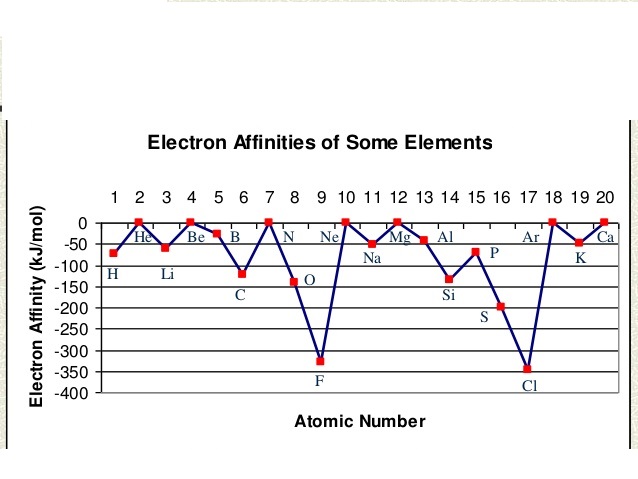
•Across a period from left to right the nuclear charge increases and atomic radius decreases. Hence, the ionization energy increases. Therefore, the tendency to form cations decreases and also the ability to act as reducing agents decreases across a period. •Similarly the ability to form anions increases and also the ability to act as oxidizing agent increases from left to right across a period.
Atomic radius
• In general, the atomic radius is referred as the distance between the nucleus and the outermost energy level occupied by electrons. • However, the position of an electron is uncertain and consequently it is difficult to express the radius of an atom. • Therefore, atomic radius is expressed in different ways.
• Attraction towards outermost electrons from the nucleus is hindered to a certain extent by the electrons existing in inner energy levels. This effect is referred as ‘shielding effect’. • Protons in the nucleus attract the electron cloud. The resultant effect of this attraction and shielding effect is referred as ‘effective nuclear charge’. • Shielding effect affects the atomic radius and ionization energy.
Covalent radius
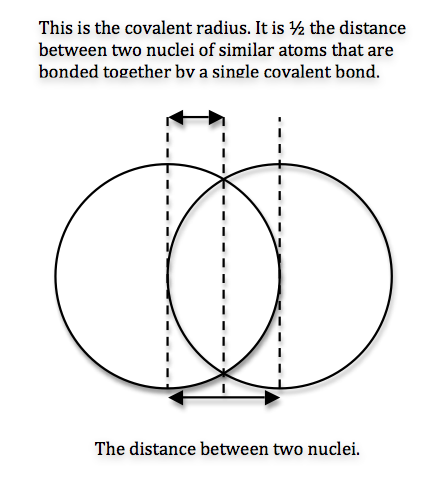
When two atoms of the same element are covalently bonded, half the internuclear distance of these two atoms is called its covalent radius. Covalent radius = d/2 • The covalent atomic radius increases down a group and decreases from left to right along a period up to group 18.
Van der Waals radius
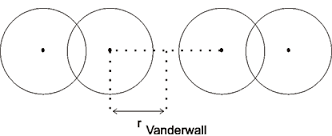
When two molecules or atoms are placed as close together as possible, half the distance between the two nuclei which are close to each other is called the Van der waals radius. Van der Waals radius = d/2
Metallic radius
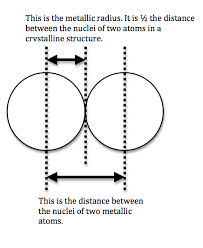
Half the distance between two adjacent cation nuclei in the metallic lattice is the metallic radius. metallic radius = d/2 • Ionization energy is determined by nuclear charge, radius and shielding effect.
Ionic radius
• A value assigned to the radius of an ion in a crystalline solid, based on the assumption that the ions are spherical with a definite size. X-ray diffraction can be used to measure the inter-nuclear distance in crystalline solids. Ionic radius can be calculated according to the inter-nuclear distance. • In general, negative ions have larger ionic radii than their neutral atoms and positive ions have smaller ionic radii than their neutral atoms.
Hund’s rule
Orbitals of the same energy (degenerate) are occupied by electrons singly so that their spins are parallel to make the maximum number of unpaired electrons and then doubly with their spins anti parallel.
Pauli’s exclusion principle
This principle states that no orbital can accommodate more than two electrons (In other words the set of quantum numbers for a certain electron of an atom is exclusive for it or no two electrons in an atom can have the same set of quantum numbers.)
Aufbau principle
It states that the filling up of electrons in the orbitals takes place according to the increasing order of energy of the orbitals in accordance with the Pauli exclusion principle.
Ascending order of energy in the sub energy levels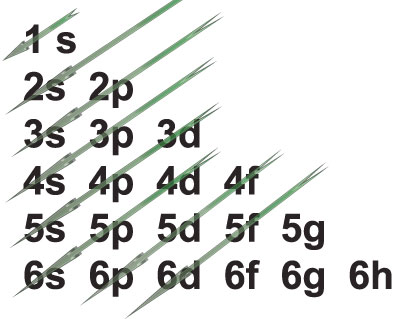
Graph showing the variation of first ionization energies of elements of atomic number
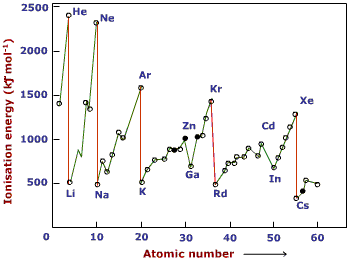
Anomalous behaviour seen from group II to III and from group V to VI is due to extra stability of half-filled (p³ ) and completely-filled shells (s² , p⁶ ). Electronic configurations d⁵ and d¹⁰ also exhibit extra stability.
• Energy is transmitted as electromagnetic radiation through the space. • They consist of both electric and magnetic fields which are perpendicular to each other. • Velocity of all the electromagnetic radiation in vacuum is; 3.00 x 10⁸ m s-1 which is the velocity of light. • When is the wave length and is the frequency, the velocity of an electromagnetic wave- C = υλ. • The energy of an electromagnetic wave E = hυ (E is the energy of a photon.) where h is a constant. It is named as Planck’s constant. Planck constant = 6.624 x 10⁻³⁴ J s
Arrangement of the electromagnetic radiations in the ascending order of the frequency produces the electromagnetic spectrum.
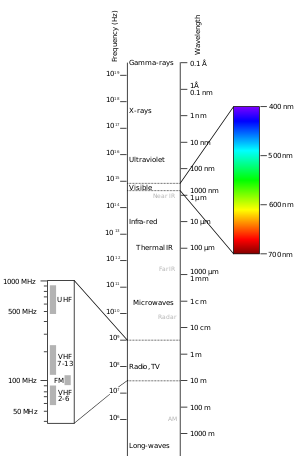
Uses of the radiations belonging to different ranges of the electromagnetic spectrum
• Radio waves : Used for communication through television and radio media.
• Radar waves : Used in naval and aeronautical security systems.
• Micro waves : Microwave ovens function due to these waves. Used in cellular phones.
• Infrared waves : Used in physiotherapy treatments. Used in sending signals by remote control devices and also in analytical work using spectroscopic methods.
• Visible waves : Vision and photography are due to waves in this range. Used in colorimetric analysis.
• Ultraviolet waves : Used for sterilization and to read confidential symbols in currency notes etc. Also used in spectroscopic analysis.
• X- rays : Used in X ray photography and in studies of the structure of crystals etc.
• γ rays : Used in the treatment of cancer.